The 11 most beautiful cars of all time

Aston Martin DB7
You could take your pick from the Aston catalogue from those golden years between 1993 and 2013, of the era dominated by the all-important golden ratio. We’ll place our flag in the sand where it all started, with the DB7. Ian Callum’s forward-looking super GT got its looks mostly before it got its badge. A project that Aston inherited, by its release, it couldn’t have been anything else. As the covers came off in 1993, the silhouette of most Aston Martins, themselves considered some of the most beautiful cars on the road, was defined for the next two decades.

Ferrari 312P Berlinetta
Ferrari’s back catalogue is for want of a less incongruous expression, riddled with beauty. It’s all hand-beaten alloy, swept-back shapes and any other hyperbolic clichés that come about when discussing Italian design and craftsmanship. While the given opinion is that Ferrari along with Aston Martin and Jaguar were the famed masters of the classically beautiful sports GT, we want to celebrate its knack for prototype racers, going mid-engined from the stunning 250LM. Otherwise known, these are the cars whose incredible dimensions and silhouettes are echoed in the most expensive and exclusive high-performance supercars and hypercars of the last 20 years. The best of the lot, we reckon, is the 312P Berlinetta, a Group 6 machine that wasn’t particularly successful and isn’t particularly widely known. But it’s low, wide, long and sleek, in the most exaggerated way of any of the cars of this period. Beauty in the name of speed is beauty at its sweetest.

Bugatti Type 57SC Atlantic
The commonly used expression is “beauty is in the eye of the beholder”, but in the case of the Type 57SC Atlantique its place as one of the most beautiful cars of all time is ratified by its creator, Jean Bugatti. It’s said that he considered the Atlantic to be his most innovative and valuable creation. There’s a sheen of beauty that comes with mystery and romance, which of course, the second Atlantic made comes with in spades, given its been lost to history by and large since 1941 and its evacuation from what was to become Nazi-occupied France. If found, it’ll be the most valuable car in the world, with estimates over £100 million. The Type 57SC was Bugatti at its fastest and most advanced in the late 1930s and indeed, is the most celebrated and venerated in the marque’s history today.

Alfa Romeo 8C Competizione
A car’s quest for beauty isn’t necessarily betrayed by its lack of historical significance. The 8C Competizione today is indeed Alfa Romeo’s forgotten supercar, built at the time to celebrate the marque’s storied racers of the 1950s and 1960s, including the Targa Florio-winning 6C 2500 Competizione. The 8C used a Ferrari-built Maserati engine and was manufactured by Maserati – hardly shot-through with Alfa Romeo pedigree. The body though. Thought by some to be the closest thing to modern automotive art, the 8C’s curvaceous form was penned by Wolfgang Egger at Centro Stille Alfa Romeo. It was beholden to no existing models, no immediate lineage. It was simply the prettiest front-engined two-seater car Egger could imagine as an evocation of those historic racers. To us, it’s one of the all-time prettiest cars ever made.

Lamborghini Miura
There wasn’t anything quite like it on the road at the time. Indeed, little to none can claim to have matched it since. The Lamborghini Miura was the original mid-engined supercar. Innovative at the time, it place its V12 transversely behind the driver. What was crafted around that basic architecture is we think an example of pure motoring beauty and distilled flamboyance, without verging into ostentatiousness. The Miura was an original. Really, no other mid-engined road car had come before it. Yes, an argument can be made for the Countach LP500 that followed, though that design suffered necessarily technical perversions to make the cars reliable prior to production. The Miura on the other hand retained its design purity of vision.

Ferrari 250 SWB/C
There’s not much explanation required with the 250 SWB/C. Like the Miura, like the 8C, you need only look at it to know why it’s on this list of the most beautiful cars ever made. That’s how beauty should work, isn’t it? There’s beauty beyond the aesthetic with the SWB/C, though. It’s also one of the liveliest iterations of the Colombo V12, which is a thing of beauty in itself.

Aston Martin DB2/4 MkIII
“But what about the DB5?” you may be crying. It might be a controversial take but we reckon the DB5 was the beginning of the end of the truly beautiful line of ‘50s and ‘60s Aston sportscars. We think it began, with the DB2/4 MkIII. Curvaceous, with those recognisable Aston cues starting to appear. The DB5 is actually where for a short period through the DB6, these cars became little more than sporty looking saloon coupes. The DB2/4 MkIII is the classic Aston aesthetic in its original and most honest form. It’s even Batman’s choice of classic Aston.

Jaguar C-X75
From the classics, to a white elephant prototype. The C-X75 is more than that though. It’s a symbol of sensible winning out over sexy. Because for Jaguar’s current range of saloons and SUVs to exist, what could well have been the most beautiful hypercar of the 21st century, or indeed ever, had to die. Calling upon much of the most extreme end of Jag’s back catalogue – the XJ13, the XJ220, the XJR15, the sleek, svelte C-X75 was Ian Callum at the height of his design power. We wouldn’t be surprised if that car not making it to production is one of his greatest professional regrets. It still gets a spot here, though, given a number of essentially production-representative cars were built.

Venturi Atlantique
The 1990s had big potential to produce some of the prettiest cars ever, as curves returned with a modern twist following the edgy ‘70s and ‘80s. That potential was only delivered in a selection of cars, many from Ferrari. We think it was realised best, however, in a French supercar, called the Venturi Atlantique. The curvy surfacing and subtle vents blended seamlessly with 1980s buttresses and residual pop-up headlights. If you’re wondering why the Ferrari 355 doesn’t get this spot, well, simply, the Venturi did it first.

Aston Martin Valkyrie
Okay, bear with us for this one. No, the Aston Martin Valkyrie not classically beautiful like an E-type or a 250 SWB/C. Not even like the C-X75. But beauty is preserved in this car, in spite of an absolute uncompromising purpose to a level not seen before. It was the insistence of Adrian Newey that the car’s elegant lines not be perverted by jutting spoilers and canards. Instead, the Valkyrie apes the finest sports prototypes in its silhouette while harnessing the air running under and through its bodywork. It’s as if the whole car is a sophisticated 3D print, with apertures and gaping chasms littered throughout. It’s a marvel of packaging and air management that’s generations ahead of anything we’ve yet seen and in addition to the beauty of purpose, it’s also entirely original and we reckon there’s some innate beauty in there too.

There we have it, then. Our picks of the most beautiful cars of all time. There will no doubt be some resistance, some curiosity about cars we’ve included and cars we’ve not. Let’s hear them.

312P Berlinetta image courtesy of Motorsport Images, 250 SWB/C image by Jordan Butters, DB2/4 III image by RM Sotheby’s, Valkyrie image by Tom Shaxson.

CARLO MARAYAG ICT-11

Beautiful Buildings In The World

Even though sightseeing the most beautiful buildings in the world may not be the first reason why you travel to the other side of the globe, you must acknowledge that stunning architecture is for sure exciting.

Certain buildings carry a lot of cultural heritage, and paying attention to a destination’s architecture helps you learn more about the history of the place.
Palace of Versailles, France

The Palace of Versailles is a Baroque-style royal residence. Listed as a World Heritage Site for 30 years, the palace of this opulent complex was inhabited by Louis XIV until the start of the French Revolution in 1789. In the 19th century, by order of King Louis-Phillipe, Versailles became the Museum of the History of France, with its rooms being devoted to housing new collections of paintings and sculptures.

With 2,300 rooms spread over 63,154 m2, the building is one of Frances’ architectural wonders. Versailles locted is within 20km from Paris, and during your tour, you can also take some time to see the Estate of Trianon, the gardens, and the Royal Stables.

Listed as a New 7 Wonder of the World, the Taj Mahal was built by Emperor Shah Jahan from 1632 to 1648 for his beloved wife, Mumtaz Mahal, who died on June 17, 1631. The monument, which is a mausoleum, was erected in the first half of the 17th century and finished over a 20-year period using more than 20,000 artisans’ labor. It is located in the Northern Indian city of Agra, on the southern bank of the Yamuna river in India, and its architecture is one of the most significant examples of Mughal architecture style. The complex also houses a mosque and guest house.

The castle is a 19th century Romanesque Revival palace that sits on a hill above the village of Hohenschwangau, in southern Bavaria, Germany. Neuschwanstein was commissioned by King Ludwig II of Bavaria as a retreat and in honor of Richard Wagner, a famous German composer and theatre director. Interestingly enough, the place was built with the King’s personal funds, rather than the Bavarian public money.

Located in Dresden, Germany, the Semperoper State Opera is a concert hall home to the Saxon State Orchestra and the Sempreoper Ballet. The opera was built in the middle of the 19th-century, and it’s a stunning architectural combination between Renaissance and Baroque styles, dotted with Corinthian pillars which are typical to the Greek Classical Revival movement.

The Senedd building in Cardiff, Wales, houses the debating chamber and three committee rooms for the Welsh Parliament. Located 3km south of Cardiff Castle, the building was designed by Rogers Stirk Harbour + Partners, which created a dramatic light-weight, gently undulating roof for the building. The main idea of the architects was to plan a transparent building that looks towards Cardiff Bay, making visible the inner workings of the Assembly and inviting public participation in the democratic process.

Jordan
Petra, Jordan.
Petra, in Jordan, dates back to the 1st century B.C., and it used to be the center of the Arab Kingdom during Hellenistic and Roman times. The city has been inhabited since early 7000 BC, and today is one of the New 7 Wonders of the World. And even though Petra consists of ruins, it’s still an architectural marvel worth seeing. This ancient city is home to the finest examples of Nabatean architecture, such as a 2,000-year-old tomb.

Macallan Distillery in Scotland is a piece of modern architecture that you must not miss. Located in Speyside, Macallan is a place where the process of whiskey production is shown to visitors. The building was designed by Rogers Stirk Harbour + Partners, who made sure that the distillery blended perfectly with its surroundings. One of the highlights of the building is the rippling timber roof made of 380,000 individual components – almost none of which are the same.

Hungarian Parliament, located in the very heart of the Pest side of the city, called The House of Nation (Országház), is one of the best examples of Gothic Revival style, having a similar façade and central dome. To decorate the building, 40 kg of gold, 500 000 ornamental stones, and 242 statues are used, and at night, the building is lit up in yellow, having a strong contrast with the azure blue Danube river.

AARON PANUNCIO 11-ICT

12 Most Beautiful Countries


Peru

JIMFENGGETTY IMAGES


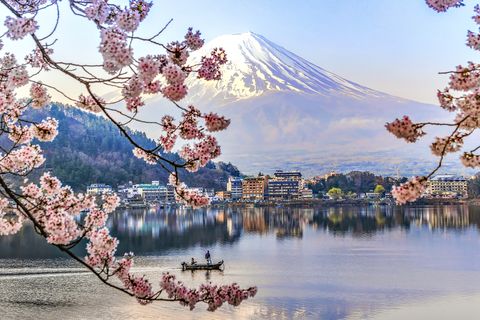
Japan

fisherman sailing boat in kawaguchiko lake and sakura with fuji mountain reflection background

No country possibly balances the excitement of the city with nature’s calmness as seamlessly as Japan. Fragrant cherry blossoms and the Arashiyama bamboo forest provide refuge in Kyoto, while at night the city comes to life with people packed into restaurants to try culinary masterpieces. Centuries-old shrines and temples dotted throughout the country provide lessons on the nation’s past. Meanwhile, Tokyo continues to prove

3

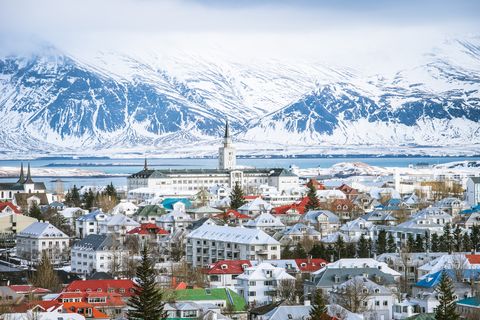
Iceland

reykjavik capital city of iceland

PATPONGSGETTY IMAGES

Subterranean ice caves, towering volcanoes, and black sand beaches—Iceland has some of the most unique landscapes on the planet. Reykjavik serves as an idyllic landing pad with its scenic views of the Blue Lagoon, an impressive art museum dedicated to Icelandic creatives, and an up-and-coming food scene. Just 30 minutes outside the city lie luxe hot springs and glacier valleys. For a full taste of what Iceland has to offer, take a road trip across Ring Road which spans 828 mil

4

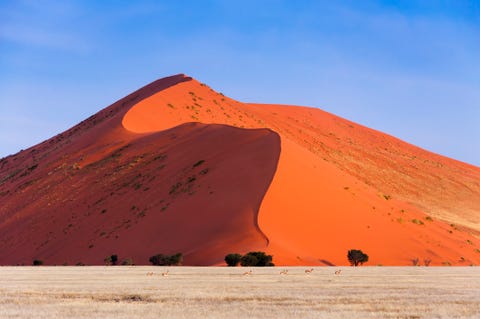
Namibia

springbok passing in front of a red dune in sossusvlei

TIAGO_FERNANDEZGETTY IMAGES

With amber sand dunes, endless golden grasslands, and emerald-blue lagoons, Namibia’s vast natural beauty goes unmatched. The Namib desert (the world’s oldest) spans more than 1,200 miles with striking dead-tree valleys at Sossusvlei and sand dunes leading to Sandwich Harbour. An abundance of wildlife thrives within the savannas and Caprivi Strip wetlands of Nambia. On the Khomas Hochland plateau, the Zannier Reserve by N/a’an ku sê serves as a natural habitat for hundreds of injured animals and welcomes guests to learn about conservation while staying at the reserve’s lodge, Omaanda.

6

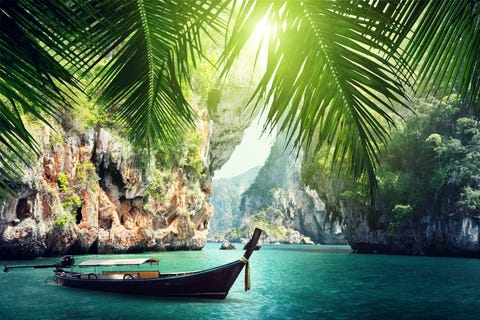
Thailand

a long boat docked on beach in krabi, thailand summers

IAKOVKALININGETTY IMAGES

Across its nearly 1,43o islands, Thailand presents a wide range of attractions, from the bustling city of Bangkok to the mangrove shores and lush forest of Koh Kood. Chiang Mai’s golden temples, lively markets, and budding culinary scene blend the thrill of a modern city with historic charm and importance, perfect for those city dwellers. Those dreamy white sand beaches with crystal-clear waters and geometric rock formations can be found along the curvaceous coast of the Krabi province. The country’s thriving capital offers a taste of both 


Greece

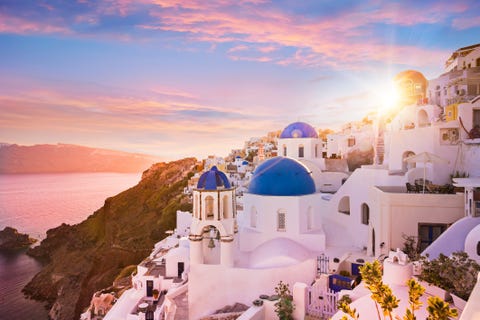
sunset view of the blue dome churches of santorini, greece

KESU01GETTY IMAGES

Whimsy and wonder sing through the picturesque islands and islets of Greece. The ancient temples and ruins of Athens and iconic blue domes and whitewashed facades of Oia are can’t-miss attractions for many travelers. However, the real magic of Greece lies in the quirky haunts of the lesser-known islands, such as the thermal baths of Evia and art exhibits of Nisyros. No trip to the Mediterranean country is complete without a stop at Naxos for fresh seafood.


New Zealand

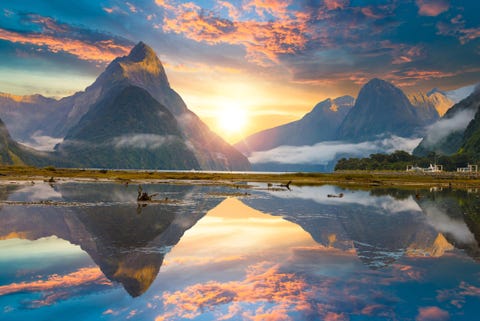
the milford sound fiord fiordland national park new zealand

PRIMEIMAGESGETTY IMAGES

From its 9,000 miles of breezy shores to its turquoise lakes cutting through mountains, New Zealand boasts some of the most intriguing landscapes in the world. Lake Tekapo may just be one of the most colorful places in the world, with brilliant blue glacial waters and never-ending fields of pink and purple lupins. New Zealand’s also bursting with a plethora of galleries and museums contributing to the country’s cultural and artistic identity. The Museum of New Zealand Te Papa Tongarewa highlights the rich history of the Māori people and their importance to the national identity of New Zealand.


Chile

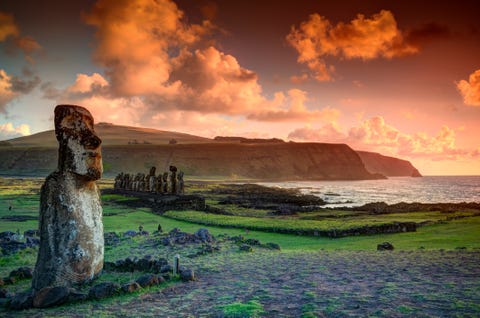
lone moai at tongariki

MARKO STAVRIC PHOTOGRAPHYGETTY IMAGES

Due to its long, narrow shape, Chile spans across an incredibly diverse range of terrains and climates, like glacial fjords in Patagonia and the rolling vineyards of the country’s Elqui Valley. Lauca National Park serves as a biosphere reserve for alpacas, pumas, flamingos, and foxes to roam freely across 303,342 acres in the Andes. It’s also home to Chungará Lake, where roughly 130 species of animals are thought to live along with rare flora. While bustling Santiago is the country’s most known city, the coastal gem of Valparaíso bubbles with bohemian bliss and creativity you’ll find nowhere else.


Italy

colors of italy series manarola village  cinque terre

FREEARTISTGETTY IMAGES

Praised for its mouthwatering cuisine, picturesque pastel villages, and lasting appreciation for the arts, it’s hard to know where to start when talking about Italy and its beauty. For the city dwellers and history buffs, Rome stands as the birthplace of Western civilization, with numerous ancient sites to discover. The Cinque Terre village of Vernazza calls for romantics to stroll throughout the candy-colored streets before settling on the harbor. And no vacation in Italy is complete without a day trip to Tuscan wine country, where vineyards extend as far as the eye can see.


Vietnam

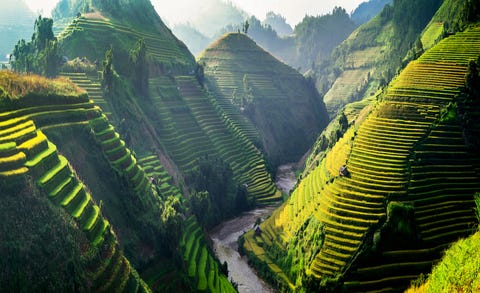
rice fields on terraces in the sun at mucangchai, vietnam

CRISTALTRANGETTY IMAGES

Vietnam’s ever-evolving cities, mountains of seemingly endless green, and idyllic coastlines have brought it to the top of every traveler’s bucket list in recent years. Its staggering temples and heritage sites—the Imperial Citadel of Thang Long, Complex of Hué Monuments, and many more—shine a light on the complex history and cultural significance of this Asian country. Growing cities Hanoi and Ho Chi Minh City showcase how the country is quickly becoming a capital for style and design. One of the natural jewels of Vietnam is Ha Long Bay, which consists of 1,600 islands and islets with spectacular limestone pillars and wave-eroded grottoes.

ADVERTISEMENT – CONTINUE READING BELOW


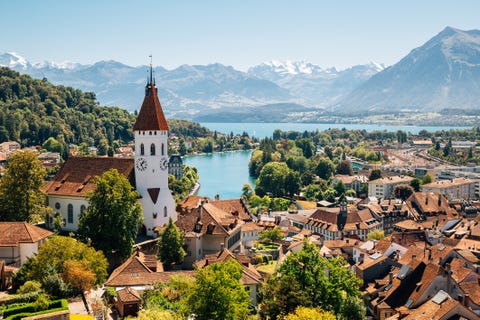
Switzerland

thun cityspace with alps mountain and lake in switzerland

SANGA PARKGETTY IMAGES

Often viewed of as a winter wonderland, Switzerland has been attracting visitors for centuries for its powdery mountains and clean, crisp air. Ski enthusiasts often flock to the quaint villages, such as hidden Zermatt in the Swiss Alps, to hit the slopes and take in the views. However, Switzerland is just as stunning during the warmer months, with lush valley forges and emerald lakes. The country also has some of the most impressive examples of Medieval and Renaissance architecture found in the old city of Bern.


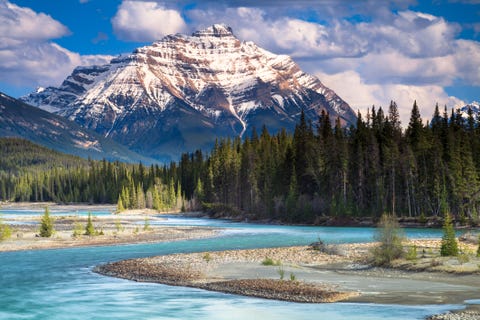
Canada

mount kerkeslin

GLOWING EARTH PHOTOGRAPHYGETTY IMAGES

As the world’s second-largest country, Canada poses as one of the most diverse places on the planet both culturally and environmentally. The verdant coastline and cliffs of the Bay of Fundy make it a one-of-a-kind, natural attraction on the country’s eastern side. Head over to the French-speaking province of Québec, where cities like Montréal and Québec City embody


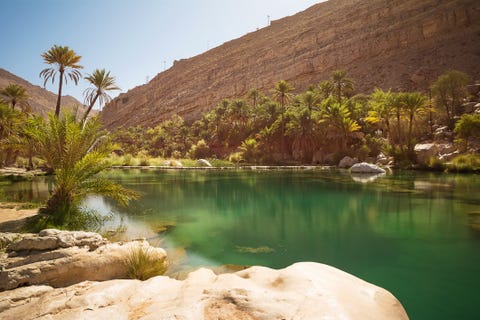
Oman

amazing lake and oasis with palm trees wadi bani khalid in the omani desert

ANGELO D’AMICOGETTY IMAGES

Upon first thought, one may think Oman may only have desert-like terrains due to its location on the Arabian Peninsula. However, this seafaring nation has a bit of everything, from towering mountains, and sandy coastlines to striking city centers. The traditional and contemporary blend in the coastal city of Muscat, which is home to one of the most renowned masterpieces of Islamic architecture, Sultan Qaboos Grand Mosque. It’s here in the country’s capital that you’ll also find a rising food scene that reinterprets traditional Omani cuisine. Venture out of the city toward the Jabal Akhdar mountains for fragrant hiking trails filled with green olive trees and apricot

JOHN WAYNE A. BABARAN 11-ICT

The world’s most incredible mountains you need to visit at least once

Matterhorn, Switzerland/Italy  

This Alpine peak spans the border between Switzerland and Italy. At 4,478 metres it’s smaller than the famed Mont Blanc (4,810 metres), but its striking pyramidal shape – not to mention its spot overlooking the cosy Swiss ski town of Zermatt – makes it the poster child for the Alps.

Matterhorn was first scaled in 1865, with Brit Edward Whymper credited as the initial person to reach the summit. His triumph was bitter sweet, though, since four climbers in Whymper’s seven-strong team plunged to their deaths during their descent.

Today, upwards of 2,000 hardy folks ascend the peak each year. If you’re determined to be one of them, the Hörnli ridge route is the most popular and is best attempted in summer. Don’t underestimate the challenge, listen to your guide and make sure you’re kitted out, crampons and all. Otherwise, take a funicular ride from Zermatt to Rothorn for jaw-dropping views without the climb.

beautiful mountains - Matterhorn Switzerland/Italy 

Hostels in Switzerland

2. Denali, USA

Mammoth Denali is the highest peak in all of North America. Craggy and snow-covered, it soars to more than 6,190 metres above sea level, rising from the stark valleys of Alaska’s Denali National Park. The mountain was once known as Mt McKinley, but after many decades of controversy, in 2016, the peak was officially dubbed Denali, a name long used by native peoples.

The peak can be seen from the Denali Park Road, which spools out for some 92 miles. Though temperatures are bracing, you’ll likely get the best views of the mountain in winter, when the cloud cover is less. During summer you can drive the first fifteen miles of the road, which is studded with stop-offs offering postcard-worthy views of the mountain from around mile nine. Look out for grizzly bears too!

To get closer still, hop on to one of the tour or transit buses operated within the park. The Kantishna Experience Tour bus swings by Reflection Pond, a vast body of water in which Denali is perfectly mirrored.

Only experienced climbers should attempt to scale dizzying Denali. If that’s you, the West Buttress route is the most popular way to ascend.

beautiful mountains - denali usa

Hostels in the USA

3. Kirkjufell, Iceland

The strangely conical Kirkjufell, or “church mountain”, is often touted as Iceland’s most photographed sight. It’s not hard to see why. The yellow-green bluff looms over West Iceland’s Snæfellsnes peninsula, with pretty waterfall Kirkjufellsfoss and several sandy beaches in its wake. Such is its drama that the mountain even made a cameo in series seven of cult TV show Games of Thrones.

Park up in the little seaside town of Grundarfjörður and follow the hour-and-a-half hiking trail to Kirkjufell’s summit. The route is steep and the terrain challenging, so best travel with a guide unless you’re a seasoned climber.

If you don’t have a head for heights, there’s a trail that loops around the mountain too. Time your trip for autumn or winter for a chance to catch the northern lights dancing over the mountain top.

beautiful mountains - Kirkjufell, Iceland

Hostels in Iceland

4. Table Mountain, South Africa

One of the world’s most famous pinnacles, Table Mountain watches over the South African city of Cape Town from 1,085 metres at its highest point. As the name suggests, it’s known for its distinctive flat top and also for its diverse wildlife. Keep an eye out for endemic African species such as dassies: cute-as-a-button, furry mammals that look a little like plump meerkats.

You may not know that Table Mountain is among the planet’s oldest peaks too. It’s more than 200 million years old and the first recorded ascent was back in the early 16th century by a Portuguese explorer named António de Saldanha.

Today a cable car can take around 800 people to Table Mountain’s summit every hour in just five minutes. To save time on the day, book tickets in advance – that way you’ll have more time to enjoy panoramas of Cape Town from the top.

If you’d prefer to take the long way, follow the zigzagging Platteklip Gorge hiking trail, which should take between 2–3 hours depending on your fitness level. Summertime (November–February), when conditions are dry and sunny, is the best time to visit.

beautiful mountains - Table Mountain South Africa

Hostels in South Africa

5. Vinicunca, Peru

Peru’s pink and yellow-streaked Vinicunca or “Rainbow Mountain” seems to belong on another planet. But it’s part of the Peruvian Andes, right here on Earth. The mountain, whose colours are caused by mineral deposits, is around a three-to-four-hour drive southeast of Cusco, a beautiful city filled with Spanish Colonial buildings.

Vinicunca’s summit is reached by the challenging, six-day Ausangate trek. Parts of the trek will be more than 4,800 metres above sea level and the altitude can be a real challenge – drink plenty of water, take regular breaks and carry paracetamol with you.

It’s worth it, though, for the otherworldly views and the route’s relative quietness when compared with the tourist-choked Inca Trail to Machu Picchu. Trail conditions are at their best and driest through Peru’s winter months: April–November.

beautiful mountains - Vinicunca Peru

Hostels in Peru

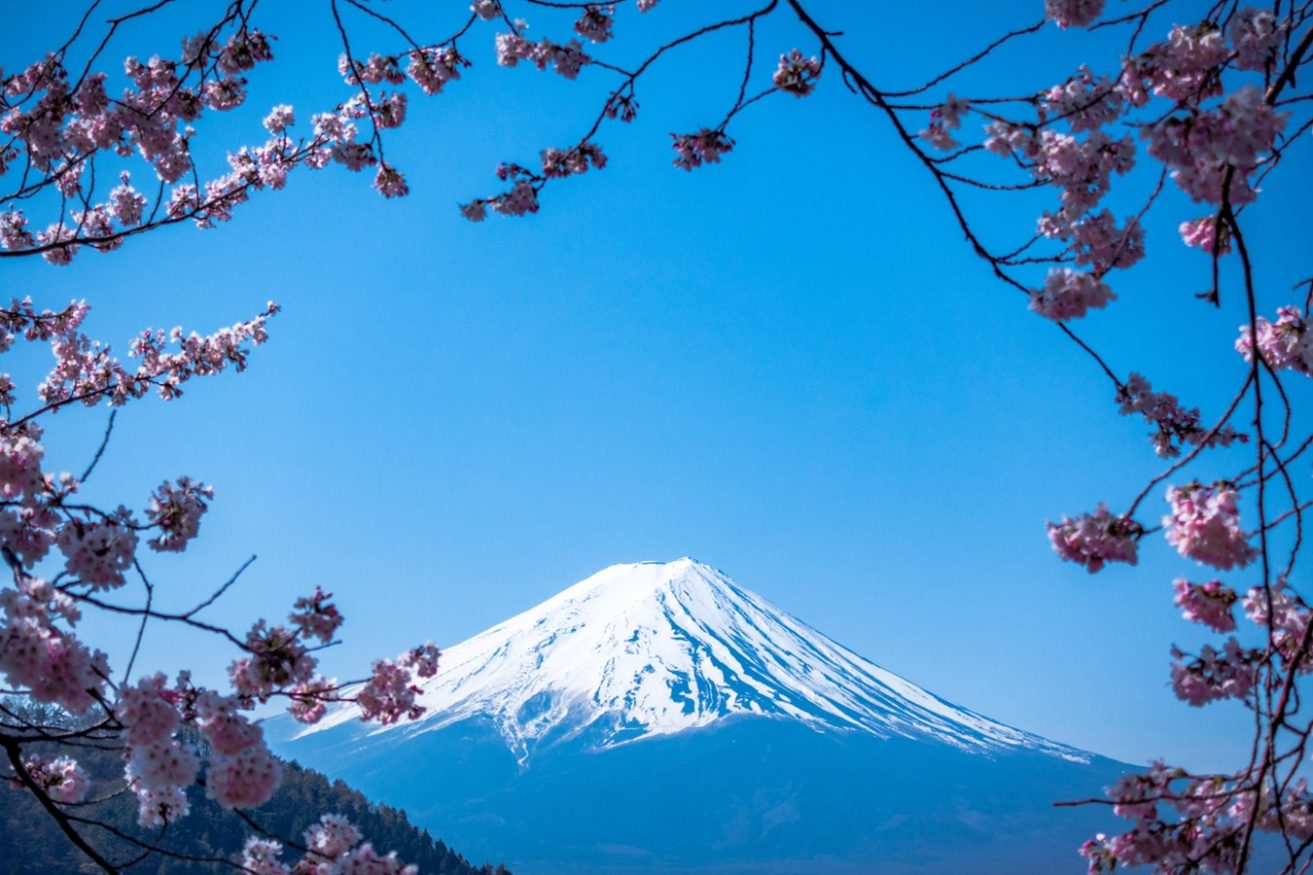
6. Mount Fuji, Japan

Mount Fuji is the largest peak in Japan. It tops out at a whopping 3,775 metres, and is at its best when finished with a generous hood of snow. It has great cultural significance too. The mountain has long been considered sacred, attracting centuries’ worth of pilgrims of Buddhist, Shinto and other faiths.

Fuji is elusive, though, disappearing behind the clouds every chance it gets. But persevere and you’ll be rewarded.

Your instinct will probably be to get as close as possible to the legendary mountain, but it’s actually best viewed from afar. Weather permitting you can even see it from some of the Tokyo’s towering skyscrapers – Bunkyo Civic Center’s free observation deck has one of the best views.

If you’re down for the hike, choose between one of the four trails that lace the mountain. The Yoshida trail is most popular choice and buses whisk you right from Tokyo to the trailhead.

beautiful mountains - mount fuji

Hostels in Japan

7. Aoraki/Mount Cook, New Zealand

New Zealand is renowned for its stunning scenery, and its highest mountain doesn’t disappoint. The vast bluff in the Southern Alps rises to more than 3,700 metres, reflecting in the glacial lakes at its feet.

The name Mount Cook was given to the peak by European settlers. But native peoples had always known it as Aoraki, after a young figure from Maori legend. Now it goes by both names.

Content yourself with hiking or biking one of the ten Alpine trails that leave from nearby Mount Cook Village, offering views of the mountain. Or, if you’ve got the experience, tackle a climb. Head here in summer (December–February), and book a local guide who knows the route. Caroline Hut is a popular spot in which to make your base and set out from.

If you’ve got some wiggle room in your budget, another incredible way to take in the peak is via a helicopter tour.

beautiful mountains - Aoraki/Mount Cook, New Zealand

Hostels in New Zealand

8. Mount Everest, Nepal/Tibet

No list of the world’s great peaks would be complete without Everest. The mother of all mountains, she rises to more than 8,848 metres, jutting out of the Himalayas, on the Nepal-Tibet border.

The mountain is named after lauded British surveyor Sir George Everest, though the peak already had two local titles: Chomolungma on the Tibetan side and Sagarmatha in Nepal. The first confirmed ascent to Everest’s summit was in 1953, by Nepali-Indian and British mountaineers Sherpa Tenzing and Edmund Hillary – though other climbers had already perished in previous attempts.

Climbing Everest is an extreme and costly undertaking, but still hundreds of adventurous souls brave it each year. Most set out from the little town Lukla in Nepal, having flown in from Kathmandu. From here the trek to the Everest Base Camp should take about 10 days.

If that all sounds a little too extreme, follow the shorter and slightly more accessible trek to Namche Bazaar, a breath-taking hillside village that offers fabulous views of Everest.

beautiful mountains - Mount Everest, Nepal/Tibet

Hostels in Nepal

9. Kilimanjaro, Tanzania, Africa

Another bucket-list-topping peak is volcanic Kilimanjaro, which you’ll find in north-eastern Tanzania, right in the centre of its namesake national park. The “Roof of Africa” is a fitting nickname for the mountain, which is 5,895m at its highest point.

Kilimanjaro is actually a volcano made up of a trio of peaks. Though if you’re planning a trip, you’ll be glad to hear it’s dormant – the last eruption happened some 360,000 years ago.

If you dream of standing at Kilimanjaro’s summit, looking out over the clouds, plan your trip for January through to March, or June through to October. The other months of the year bring with them rain and snow.

Most trekkers set their sights on the Marangu Route: expect six days’ worth of hiking over the craggy terrain and rest up in mountain huts along the way. If you’re content with seeing the peak from a distance, the Tanzanian town of Moshi is a great vantage point.

beautiful mountains - Kilimanjaro, Tanzania, Africa

Hostels in Tanzania

10. Cradle Mountain, Tasmania, Australia

At 1,545 m, this is not the tallest mountain in Australia – but what it lacks in size, it more than makes up for with beauty. Overlooking sapphire Dove Lake, the ridged scarp of Cradle Mountain is quite a sight. It dominates Cradle Mountain-Lake St Clair National Park, snow-freckled in winter, and rising from lush grass and forestland through summer.

Excavations of the area around the mountain have unearthed many native sites, but it was English surveyor Joseph Fossey who christened the peak “Cradle Mountain”, because of its curiously curved shape.

Now it’s one of Tasmania’s most popular tourist attractions and is around an hour-and-a-half drive from the busy city of Devonport. There are hikes for all abilities throughout the national park. They all reward the walker with awesome views of Cradle Mountain, and also take in glacial lakes, dense woodland and the occasional waterfall along the way.

The 6-kilometre Dove Lake Circuit is a favourite. If you’ve got your sights set on the summit, the main trail leaves from Dove Lake and will take 6–8 hours to complete (that’s the whole round-trip). Be prepared to scramble over some tricky boulders on the way.

Views of the mountain are majestic in both winter and summer, but if you’re planning to make the ascent, best come in summer (November–April) when conditions are a little more predictable.

beautiful mountains - Cradle Mountain, Tasmania, Australia

AARON MARK PANUNCIO 11-ICT

Design a site like this with WordPress.com
Get started